Showing posts with label Christmas. Show all posts

Monday, December 26, 2011

Today is Boxing Day, December 26th


Today is Boxing Day, a traditional English holiday which extends Christmas giving.

Despite its name, Boxing Day has nothing to do with pugilistic competition. Nor is it a day for people to return unwanted Christmas presents.

Boxing Day began in England during the Middle Ages, and the tradition continued through the Victorian era. Wealthy family households would celebrate Christmas on Christmas day but this meant that their servants had to continue with their normal work and so, in effect, missed out on the celebration. To compensate for this the wealthy families would set aside 26th December as the time for their servant's Christmas.

Work duties would be dropped to a minimum with family members assuming some of the responsibilities of the servants such as keeping the fireplace stocked with coal, greeting visitors themselves and supplying the servants with a good Christmas dinner. The term "Boxing day" refers to the gift that the family gave to each servant - wrapped in box.

In the past people like the postman (mailman), refuse collector and milkman would call at the houses they serviced for a Christmas 'Box' but nowadays they are given a 'tip' when the homeowner sees them.

Even though many no longer remember the traditional reason for Boxing Day it is celebrated in Great Britain, Canada, Australia, and New Zealand.

My childhood memories of Boxing Day are that we spent the day together as a family, we relaxed, enjoyed our presents and ate leftovers from the Christmas dinner. Also our dad did not have to go to work on that day.

Boxing Day is just one of the British bank holidays recognized since 1871 that are observed by banks, government offices, and the post office.


Sunday, December 25, 2011

On this Blessed Day Christ the Saviour is Born


Silent night, holy night

All is calm, all is bright

Round yon Virgin Mother and Child

Holy Infant so tender and mild

Sleep in heavenly peace

Sleep in heavenly peace


Silent night, holy night!

Shepherds quake at the sight

Glories stream from heaven afar

Heavenly hosts sing Alleluia!

Christ, the Saviour is born

Christ, the Saviour is born


Silent night, holy night

Son of God, love's pure light

Radiant beams from Thy holy face

With the dawn of redeeming grace

Jesus, Lord, at Thy birth

Jesus, Lord, at Thy birth.


Noche de paz, noche de amor,

Todo duerme en derredor;

Fieles velando allí en Belén

Los pastores, la madre también,

Y la estrella de paz,

Y la estrella de paz.

Written by Austrian priest Father Josef Mohr -
Melody composed by Franz Xaver Gruber. In 1859


Wishing you and yours peace on this blessed day.

peacesojourner

Friday, December 23, 2011

The History of the Christmas Tree


What does the decorated evergreen tree have to do with the birth of Jesus? The answer is ‘very little’. There are cedar trees in Lebanon but this is not even close to Bethlehem, the birthplace of Jesus.

Centuries before the birth of Jesus the ancient pagans, Druids, Egyptians, Chinese, and Hebrews celebrated the Winter Solstice, (Dec. 21st), the day of the year that the Sun begins its ascent in the sky, thereby ushering a fertile time of planting and bountiful harvests. The evergreen tree represented eternal life and the promise of replenishment during the cold winter months. Apples and other fruit were hung upon the tree to represent the plentiful food to come. Candles were lit to symbolize the warmth and brightness of the sun. While the Christmas tree is generally associated with Christ, it predates the history of Jesus by many centuries.

Until about 1700, the use of Christmas trees appears to have been confined to the Rhine River District in Germany. From 1700 on, when lights were accepted as part of the decorations, the Christmas tree was well on its way to becoming a tradition. This Christmas tree tradition most likely came to the United States with Hessian troops during the American Revolution, or with German immigrants to Pennsylvania and Ohio.

However, the custom spread slowly. The Puritans banned Christmas in New England. Some Fundamentalist Christian groups oppose Christmas trees and even the celebration of Christmas for their members. This includes the Jehovah's Witnesses. Part of the opposition is because the custom of decorated trees originated in Paganism. They also oppose trees because of a literal interpretation of the quotation from Jeremiah 10:2-4:

"Thus saith the LORD, Learn not the way of the heathen, and be not dismayed at the signs of heaven; for the heathens are dismayed at them. For the customs of the people are vain: for one cutteth a tree out of the forest, the work of the hands of the workman, with the axe. They deck it with silver and with gold; they fasten it with nails and with hammers, that it move not." (KJV).

The Christmas tree market was born in 1851 when Catskill farmer Mark Carr hauled two ox sleds of evergreens into New York City and sold them all. By 1900, one in five American families had a Christmas tree, and 20 years later, the custom was nearly universal.

Christmas tree farms sprang up during the depression. Nurserymen couldn't sell their evergreens for landscaping, so they cut them for Christmas trees. Cultivated trees were preferred because they have a more symmetrical shape then wild ones.

Trees and branches can be made purposeful as well as symbolic. The tree is a symbol of a living Christmas spirit and brings into our lives a pleasant aroma of the forest.

Today, the Christmas tree has become accepted by most Christians, by people of other faiths, and for those who do not follow an organized religion. It has become a popular late-December tradition and part of our present-day culture.

I enjoy the Christmas tree and have many fond memories of decorating the tree with my family when I was a child, and when my own children were growing up. But it is important to remember that the tree and the decorations have more to do with enjoying the celebration of the changing seasons and absolutely has nothing to do with the purpose of the Christmas season, which is to celebrate the birth of Jesus Christ.

However, to blend the two occasions an angel or star is often placed at the top of the tree, representing the host of angels or the Star of Bethlehem from the Nativity.

That seems to be a creative way to make a peaceful solution to this dilemma -

don't you agree?

peacesojourner


Sunday, December 18, 2011

Sunday Reflection - Fourth Week of Advent


The Fourth Week of Advent


The Christmas season - those weeks immediately after Thanksgiving through the first of January - is a time of great anticipation and hopefulness.

It is also a time of paradox, a contemplative time, an ambiguous season of bitter cold and cozy homes with family and friends gathered around the fireplace, of solstice celebrations and holiday lights, of reverence and loneliness, of renewal and dormancy.

At Christmas time we are called to lift our spirits with good cheer and merry laughter; to appreciate the commonplace and simple things, like an evergreen tree set against the backdrop of a steel grey sky. The senses turn inward. The days grow darker. We burn candles and recall old dreams, dreams of our youth or years to come. We enjoy the bounty of local farmers - pumpkins, gourds, apples, squash. Cold weather vegetables and herbs, like parsley and thyme, come into renewed vigor with the first frost. It is a time when too many hunger for a warm embrace, to be loved, and for kindness.

It is a time of evening carols and lessons, a time when special rose incense is burned, a time marked by contemplation, anticipation, waiting, watching, preparation in the Christian calendar for the birth of Jesus Christ. For a few short weeks, the world is sanctified with the fullness and richness of these paradoxes.

As a Quaker, we believe that there is "that of God" in each person, regardless of a person's race, creed, social status, gender, level of education, or whether a person believes in God or not. This belief is an integral part of Quaker faith and practice. It invites us to remember, to recognize the sacred nature of the human heart. It invites us into the self-revealing loving presence of God and of Christ. But how can we find this "Christ centeredness" in such paradox of the season?

For me, the spirit of Christ is the spirit of kindness, love and compassion. It is a consciousness that pervades heart and mind. The Light of Christ is a way of knowing the path of goodness.

Christmas reminds me of these important lessons and a deeper knowing of the Light of Christ!


A Seasonal Reflection -by Valerie Brown
From the Kirkridge Retreat Center


Take time to be quiet and to rest


Offer simple hospitality to others


Express gratitude


peacesojourner


Thursday, December 15, 2011

If It Is Thursday It's Going Green - Thoughtful Gift Giving

Remember the 4 R’s: Reduce, Reuse, Recycle, Repair

As we approach the Christmas season and are caught up in the hustle and bustle of activities, give some thought to energy saving purchases.

Plan to purchase a living Christmas tree with roots attached. Later you can plant it in your yard or donate it to your local parks department. If it’s a cut tree, recycle it. Shred the live tree and use the mulch in the garden around evergreen shrubs and trees.

If purchasing new holiday lights, consider seasonal light emitting diode, or LED, strings of lights. These can use up to 95 percent less energy than conventional bulbs, and they last seven times longer. Using holiday lighting wisely can lower power consumption. More strings of lights means more energy used - try reducing the number this season.

Be financially responsible: Overspending during the holidays will not only increase your stress now, but will leave you feeling anxious for months afterward as you struggle to pay the bills. Step back from the excessive gift-giving and practice simplicity, creativity and basic human kindness

Donate old toys: As the Holidays approach, help the children to sort through their toys and clothes so that any that are in good condition, but no longer used, can be shared with others. Items can be donated to a local children’s hospital, pre-schools or thrift shop where they can find a good home.

Going green is the way to go when planning gifts. - When you give someone a “green gift” it means you have taken the time to consider the environment. - It means you have given a gift that shows something about you - and that you have created a ripple effect whose final result is too significant to calculate.

1. Make a gift. Be conscious of the materials you choose and create something to show someone you care. Picture frames and mirrors are perennial favorites and people tend to keep them.

2. Buy a gift that adds a lasting element to someone’s life. A houseplant or a live organic herb garden can be wonderful gifts, they live on and bring joy (and oxygen) into someone’s home. Buy a calendar printed on 100% recycled paper with daily affirmations and uplifting quotes. These will remain with the person for a year at least, and can make a difference everyday.

3. Buy a stress-reducing present for someone. Get your best friend a gift certificate for a one-hour massage, facial or acupuncture treatment. How about a free week of yoga classes, Pilates or personal training sessions? You will be doing more for the recipient of these gifts than initially meets the eye.

4. Give to a charity. Instead of giving something directly, consider giving to a charity on behalf of a friend or family member. Many charities now allow you to track the progress being made as the result of your contribution. By doing this you are setting up a powerful connection for someone that can go way beyond a simple donation.

5. Buy something educational and entertaining. A book, CD or DVD can make a fantastic present especially when the content is uplifting.

Does the holiday have you feeling depressed? Help others - it is the best antidote to seasonal sadness. Find someone who is struggling more than you are, lend them a helping hand, and remember the real meaning of the holidays. Jesus is the reason for the season!

Don’t forget, “together we can make a difference!”

peacesojourner

Sunday, December 4, 2011

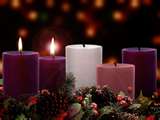
Sunday Reflection - Today is the Second Sunday in Advent


Today is the second Sunday in Advent

The Advent season marks the beginning of the Christian year in many western churches in the United States. Its length varies from 22 to 28 days, starting on the Sunday nearest St Andrew’s Day (read this blog's Nov 30th entry) and encompassing the next three Sundays, ending on Christmas Day.

Many Christians in the United States attend a church service during Advent and may engage in activities such as special prayers and contributing to ideas on enhancing peace. Many Advent traditions are observed in the United States in the prelude to Christmas Day. For example, the Advent wreath is becoming increasingly popular in the United States. The wreath can be seen in various churches across the nation around this time of the year.

Advent calendars of all designs are also given as gifts at this time of the year. The calendars feature openings in the form of windows or doors that are numbered to count the days to Christmas. Calendars may contain chocolates, toys, or candy and are given to children as a fun way to observe the Christmas countdown. Some traditional Advent calendars show 24 days but many Advent calendars showing 25 days, with the last opening on Christmas Day.

It is uncertain as to when exactly the celebration of Advent was first introduced in the Christian church. Some sources say that Advent began on November 11 (St Martin's Day) at some time in the fifth century in the form of a six-week fast leading to Christmas. Advent was reduced to its current length at some stage in the sixth century and the fasting was later no longer observed. Advent is originally a time to reflect and prepare for Christmas

Advent traditions spread from Europe to the United States, especially the Advent calendar, which became very popular in the United States after World War II as American military personnel and their families who were stationed in Germany brought them home and made them a part of the pre-Christmas traditions

Purple is historically the main color used for Advent because it reflects penitence, fasting, and the color of royalty to welcome the Advent of the king (Jesus Christ). The focus of the entire season is the celebration of the birth of Jesus the Christ in his first Advent, and the anticipation of the return of Christ the King in his second Advent.

Advent wreaths are symbolic of Advent. They are usually made of fir and decorated with gold and silver ribbons or scarlet woolen threads. Lit wreaths may be displayed on the table where family and friends sit while singing carols and preparing handmade gifts.

So there you have it:

Advent is a period of spiritual preparation in which many Christians make themselves ready for the coming, or birth of the Lord, Jesus Christ. During this time, Christians observe a season of prayer, fasting and repentance, followed by anticipation, hope and joy - not only by thanking God for Christ's first coming to Earth as a baby, but also for his presence among us today through the Holy Spirit, and in preparation and anticipation of his final coming at the end of time.

peacesojourner


Saturday, December 25, 2010

On this Blessed Day Christ the Saviour is Born

The Nativity Pageant held at First Presbyterian Church,
Buffalo, NY last Sunday


On this Blessed Day Christ the Saviour is Born

Silent night, holy night

All is calm, all is bright

Round yon Virgin Mother and Child

Holy Infant so tender and mild

Sleep in heavenly peace

Sleep in heavenly peace


Silent night, holy night!

Shepherds quake at the sight

Glories stream from heaven afar

Heavenly hosts sing Alleluia!

Christ, the Saviour is born

Christ, the Saviour is born


Silent night, holy night

Son of God, love's pure light

Radiant beams from Thy holy face

With the dawn of redeeming grace

Jesus, Lord, at Thy birth

Jesus, Lord, at Thy birth.

Written by Austrian priest Father Josef Mohr -

Melody composed by Franz Xaver Gruber. In 1859


Wishing you and yours peace on this blessed day.

peacesojourner

Thursday, December 23, 2010

Wednesday, December 22, 2010

Things That Make You Go Hmmm.............


AFP – An Emirati man walks past an 11-million-dollar Christmas
tree at the Emirates Palace hotel.

ABU DHABI (AFP) – UAE - (United Arab Emirates) Hotel erects 11-million-dollar Christmas tree. Christmas came in extravagant fashion to the Muslim desert emirate of Abu Dhabi as a glitzy hotel unveiled a bejeweled Christmas tree valued at more than 11 million dollars .

Called the most expensive Christmas tree ever, with a value of over 11 million dollars. The 13-metre (40-foot) faux evergreen, located in the gold leaf-bedecked rotunda of the hotel, is decorated with silver and gold bows, ball-shaped ornaments and small white lights.

But the necklaces, earrings and other jewelry draped around the tree's branches are what give it a record value.

It holds a total of 181 diamonds, pearls, emeralds, sapphires and other precious stones.

The tree itself is about 10,000 dollars. The jewelry has a value of over 11 million dollars.

This will probably be an entry into the Guinness book of world records. The Emirates Palace Hotel plans to contact the organization about the tree which is to stay until the end of the year.

The Emirates Palace Hotel is a massive, dome-topped hotel sitting amid fountains and carefully manicured lawns. The hotel, which bills itself as seven-star recently introduced a package for a seven-day stay priced at one million dollars.

*****

When I read this article in the news this week I found myself experiencing several emotions. Such opulence during times when so many people around the world are suffering from a lack of basic needs such as housing, water and food, is hard to think about.

I could only think of a statement that Arsenio Hall made famous:

"Things that make you go Hmmmm."

peacesojourner


Sunday, January 10, 2010

Sunday Reflection - The Purpose of the Star

Astrology Today

The stars in the sky

We have come to the close of the Christmas season celebration and we realize that there are so many amazing aspects of the events surrounding Christ’s birth. One that has especially made its way into our decorations, cards, carols and nativity scenes is the Star of Bethlehem. Have you ever gone outside on a clear night and looked up into the night sky? It’s beautiful, isn’t it?

In the beginning, God created the heavens and the earth. He created the galaxies and the stars, and he set them spinning in space in astronomical precision. The book of Genesis tells us that God gave us the stars in the sky to give light on the earth and to serve as signs to mark seasons and days and years. (Genesis 1:14-15) God designed the universe with order, and as the ancients studied the night sky, they observed this beauty and order.

For the most part, in the days of Jesus’ birth they found the sky was predictable. As the great star wheel turned above the earth, each of the stars stayed in relative position to each other. The moon and the planets moved independently of the stars, but you could still plot their course in the sky.

The Magi, astrologers from the East, noticed something unusual in the sky around the time of Christ’s birth. Something out of the ordinary caught their attention and spurred them on to make the long journey to Jerusalem. Whatever Scriptures they knew, somehow they were able to make the connection between the star they saw rising in the east and the ruler who was prophesied in the Old Testament. And so they came to worship him.

The gospel of Matthew begins with foreigners from a distant nation coming to worship Christ. Matthew ends with Jesus’ commission to the church to “go and make disciples of all nations, baptizing them in the name of the Father and of the Son and of the Holy Spirit.” (Matthew 28:19) It is a reminder to us that we are to share the good news of Jesus with everyone, everywhere we can, both here where we live, and around the world. We are to make disciples of all nations as we point them to Jesus.

In the Christian faith this past week we observed the Epiphany. The word comes from the Greek work "phos" meaning light. To have an epiphany means to come to a new understanding, to experience a revelation, to have "the light come on," and to see things in a new light. It is the opportunity to see God's light in a new way.

The purpose of the star is to point us to him.

Have you shared the Good News with anyone lately?