Showing posts with label Farmer's Markets. Show all posts

Thursday, September 6, 2012

If It is Thursday it's Going Green - Humane Farm Animal Care


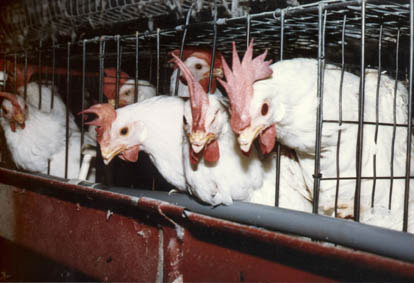
Battery Cages

Like all chickens raised for eggs, these hens have had large portions of their sensitive beaks cut off, and they will spend their entire lives in a filthy, cramped wire cage. Each hen has an area smaller than a sheet of notebook paper in which to stand and does not have enough space to spread even one wing. The cages are stacked on top of one another, so excrement from hens in higher cages often falls on those below. Ammonia and the stench of feces hang heavy in the air, and disease is rampant in these filthy, cramped conditions.

Humane Farm Animal Care

I was buying organic eggs until I recently viewed a video of the chickens on the farm where the eggs came from. It showed the chickens living in cramped cages with several being squeezed into a small space. Their beaks are ground down so low that they cannot even groom themselves. Their living situations are just deplorable. I learned that I should seek out free range eggs from chickens who are fed organically. I am happy to report that I was able to purchase them from the local farmer’s market.

It's sad fact, but more than 10 billion animals are raised for food in the United States every year and many of them are treated inhumanely.

Animals are frequently confined in spaces so small they can't stretch their limbs, flap their wings or turn around. These unnatural practices compromise their immune systems, so to keep them alive they are pumped full of antibiotics, damaging the quality and safety of our food and our medicines.

Grocers need to know that their customers won't stand for the inhumane practices at factory farms. And when grocers know, you, their customers demand Certified Humane® foods, they will in turn require their suppliers (the farmers and growers) meet those standards.

You can take a stand against factory farms by buying Certified Humane® products. The Certified Humane® label on a product means: the animals are fed a healthy diet without antibiotics or hormones, cages and crates are prohibited and the animals have ample space for them to stretch their limbs, flap their wings and move around.

Pledge to buy Certified Humane® products. If you cannot find them at your local grocery store ask your grocer to start selling Certified Humane® foods.

Better yet, consider not eating meat. Or at least try one or two meat free meals a week. Educate yourself about the foods that you purchase for your family. In Western New York the farmers have already started to bring their foods to the open markets and there is plenty to choose from.

Choose organic (no chemicals added). If you buy in a local store check the labels and try to purchase foods that were not transported from other countries or distant states. This will cut down on pollution in the environment caused by trucks driving thousands of miles to your area.


Buy local and read those labels


Thursday, August 23, 2012

If It is Thursday it's Going Green - Take the Stairs


Remember the 4 R’s:

Reduce, Reuse, Recycle, Repair

Some Things You Can Do To Make a Difference:

Power down: Many of the resources we use and the waste we create is in the energy we consume. Look for opportunities in your life to significantly reduce energy use.

Drive less, fly less, turn off lights, buy local seasonal food (food takes energy to grow, package, store and transport), use a clothesline instead of a dryer, vacation closer to home, buy used or borrow things before buying new, recycle.

All these things save energy and save you money.

Waste less: Per capita waste production in the United States just keeps growing. There are dozens of opportunities each day toreduce the waste in your home, school, workplace, church and community.

This takes developing new habits that soon become second nature. Use both sides of the paper, carry your own mugs and shopping bags, get printer cartridges refilled instead of replaced, compost food scraps, avoid bottled water and other over packaged products, upgrade computers rather than buying new ones, repair and mend rather than replace - the list is endless! The more we visibly engage in reuse over wasting, the more we cultivate a new cultural norm, or actually, reclaim an old one!

Unplug (the TV and Internet) and Plug In (the community). The average person in the United States watches T.V. over 4 hours a day. Four hours per day filled with messages about stuff we should buy. That is four hours a day that could be spent with family, friends and in our community.

Park your car and walk. Make exercise part of your daily routine, take the stairs not the elevator. Driving less and walking more is good for the climate, the planet, your health, and your wallet.

Talk to everyone about these issues:

Let people know the changes that you have made and the difference that they make to the environment. Talk to as many people who will listen - at school, at work. Tell your neighbors, and especially your family and friends. Talking about these issues raises awareness, builds community and can inspire others to action. Children talk it over with your parents.

Make Your Voice Heard.


Tuesday, October 25, 2011

How to Cook Acorn Squash


Here is a seasonal vegetable that is delicious and so easy to prepare.

Baked Acorn Squash

Instructions

Things You'll Need:

1 medium acorn squash, halved and seeded

1 tablespoon butter

2 tablespoons brown sugar

Baking pan


Step 1:

Preheat oven to 400 degrees F.


Step 2:

Use a paring knife to score the insides of each half several times.

Add 1/4 inch of water to the bottom of the baking pan.


Step 3:

Coat the inside of the two halves of squash with 1/2 tablespoon butter

and 1 tablespoon brown sugar. Place each half into the baking pan, flesh side UP.

Step 4:

Bake squash for 1 to 1 1/2 hours until squash is soft and tops are browned. Spoon sauce which has not been absorbed over exposed areas.


Slice and enjoy!

This is a great substitute for potatoes with a meal!


Acorn squash contains magnesium, potassium, vitamins C and A, and calcium.


An entire acorn squash only contains 172 calories!


Alone, a whole acorn squash contains less than 1 mg of fat.


Acorn squash is at it's peak in fall through winter, but can usually be found in the grocery store year round.


Store an acorn squash in the refrigerator for up to a week when placed in a paper bag


Thursday, June 30, 2011

If It Is Thursday It's Going Green - Support Local Food Growers

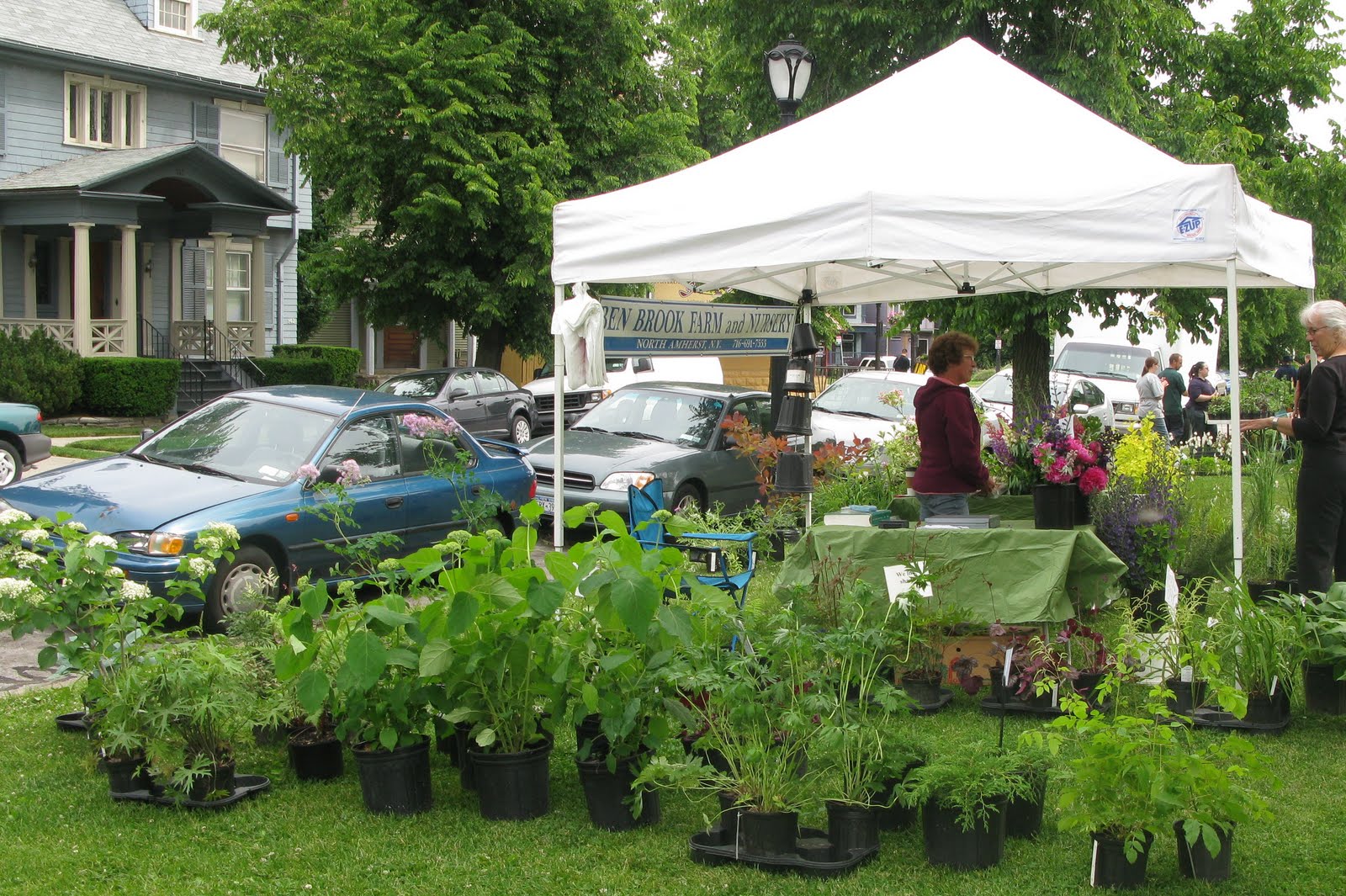
Bidwell Farmer's Market - Buffalo NY


Honey from a local farmer

Strawberry season - a wonderful time of the year

With the 4th of July fast approaching, now is a good time to get your menu set for the day. After all, food is usually one of the biggest parts of the celebration and the fresh foods of summer make a great addition to the day

The Kitchen Gardener’s International (KGI) has declared July 4 “Food Independence Day.” They encourage everyone to support local food by growing some of your own food and supporting local food producers and growers in your area.

Kitchen Gardeners International is a non-profit group that focuses on healthier food and a healthier planet by promoting home or “kitchen” gardens and providing information and resources for those who do this. There are about 20,000 kitchen gardeners from over 100 countries who help each other out via blogs, forums and social networking, and who organize activities all over the world inspiring people to grow their own sustainable food.

Spearheaded by enthusiastic and tenacious kitchen gardener, Roger Doiron, the driving force behind the successful Eat The View Campaign that gathered 110,000 signatures to encourage the White House to replant a Kitchen Garden.

So as you make plans for your cookouts give some consideration to buy local.As KGI points out, even though July 4th only comes once a year, every day can be Food Independence Day if you support local food. As they say, “local foods are patriotic, whether you’re buying them from producers in your area or growing some of your own. They’re good for our local farmers, our economies, our health, and that of the planet. Best of all, they taste great because they’re fresh from the soil.”