Showing posts with label Moon. Show all posts

Wednesday, August 1, 2012

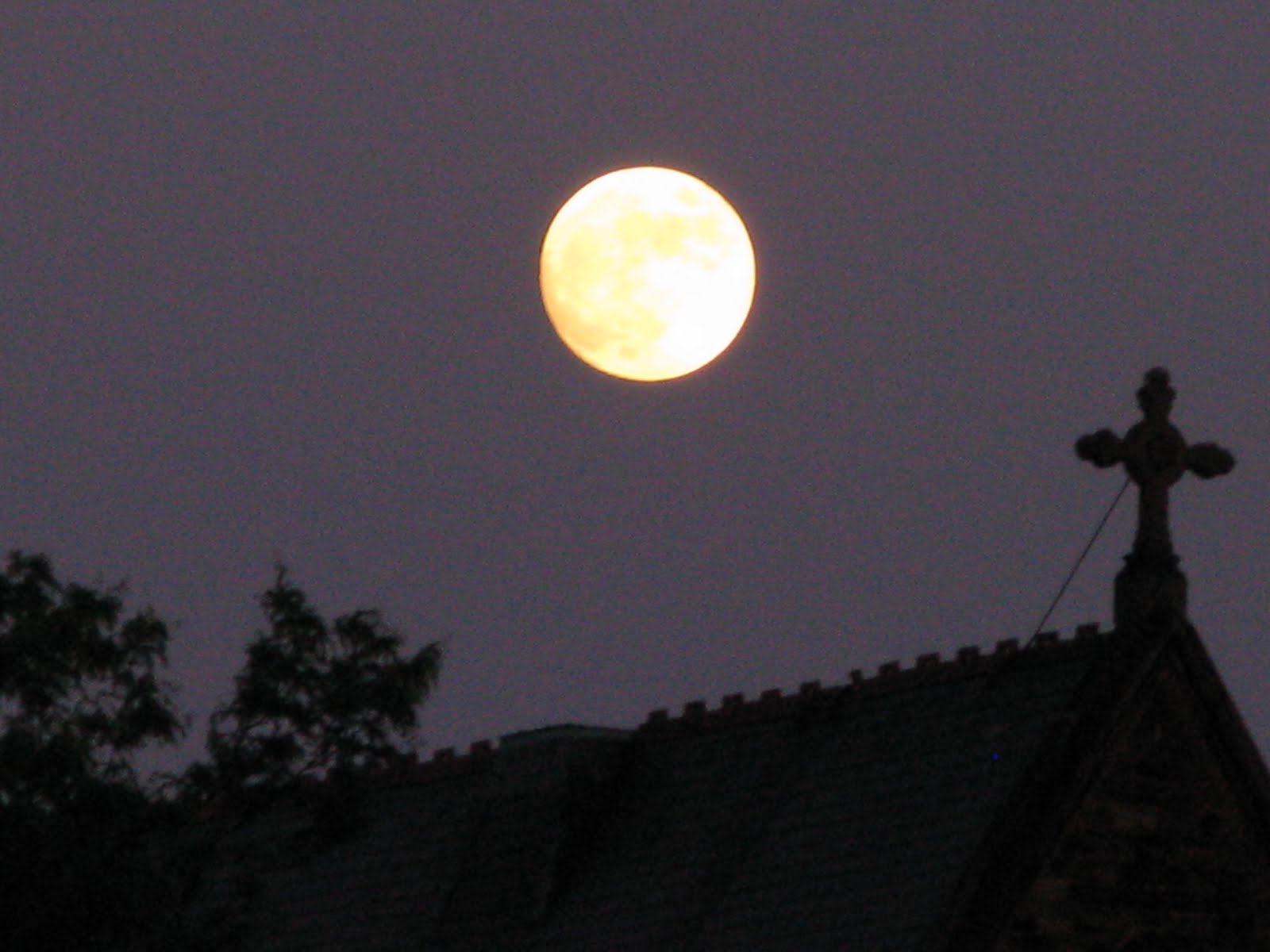
Full Sturgeon Moon - August - 2011


Full Moon for August, 2011

Tonight there will be a full
August Moon called the Full Sturgeon Moon

Full moon names date back to Native Americans, of what is now the northern and eastern United States. The tribes kept track of the seasons by giving distinctive names to each recurring full moon. Their names were applied to the entire month in which each occurred. There was some variation in the moon names, but in general, the same ones were current throughout the Algonquin tribes from New England to Lake Superior.
European settlers followed that custom and created some of their own names. Since the lunar month is only 29 days long on the average, the full Moon dates shift from year to year.
The fishing tribes are given credit for the naming of this month's moon, since sturgeon, a large fish of the Great Lakes and other major bodies of water, were most readily caught during this month.
A few tribes knew it as the Full Red Moon because, as the moon rises, it appears reddish through any sultry haze.
It is also called by
Old Farmer's Almanac - Sturgeon Moon
Algonquin / Colonial Corn Moon
English / Medieval - Lightening Moon
Neo-Pagan - Grain Moon
Celtic - Barley Moon
Other Names - Dog Days Moon, Fruit Moon, Green Corn Moon, Wyrt Moon


Full Moon celebration: Now more than ever, the world needs our attention and care.

The unending conflicts around the world have made it even more apparent that compassion, forgiveness, acceptance, patience, virtue, equanimity, determination, and wisdom are essential qualities for cultivating peace. Can you imagine if everyone committed to practicing these humble, heart-opening, mind-transforming ways of being in the world? So much would change.

This is the Full Moon to honor freedom, idealism, humanitarianism, without causing harm to anyone. Raise-up everyone and leave no one behind. Get involved in your community, volunteer your time, and raise awareness in your neighborhood. It’s summer, have a block party and raise funds for a good cause.

Speaking spiritually the time of the full moon is a bridge to enlightenment.

Heads up tonight and view the wonders of Mother Nature

peacesojourner

Tuesday, July 3, 2012

Full Moon on July 3, 2012


Tonight there is a full moon:

The lighted side of the Moon faces the Earth. This means that the Earth, Sun, and Moon are nearly in a straight line, with the Earth in the middle. The Moon that we see is very bright from the sunlight reflecting off it.

Many people believe that the moon, its phases and the signs of the zodiac all have an influence on when you should plant crops and do other activities. This belief is based on centuries of accumulated folklore passed down from generation to generation. 
In general, crops that produce their harvest above ground should be planted during the waxing moon, or when the moon is between new and full. Crops, which produce their harvest in the ground, should be planted during the waning moon, or when it is between full and new. 


The first full moon of Summer has several names. It is called the Hay Moon - Buck Moon - Rose Moon - Wyrt Moon - Blood Moon - Ripe Corn Moon and the Honey Moon.

The Full Buck Moon got it's name because July is normally the month when the new antlers of buck deer push out of their foreheads in coatings of velvety fur. Sometimes this moon was also called the Full Thunder Moon, because thunderstorms are most frequent during this time.

Full Moon names date back to Native American Indians of the northern and eastern United States. Each Nation kept track of the seasons by giving distinctive names to each recurring Full Moon. Their names pertained to the entire month in which each occurred. There was some variation in the names, but generally the same ones were current throughout the Algonquin tribes from New England to Lake Superior. European settlers followed the custom and even created some of their own.

This is the time of year for releasing the past: the mind grows super-sensitive and strives to give voice to feelings. Hiding and blaming are two tactics that won't advance one’s interests, yet sharing a secret with someone you trust can lift a burden. Bring unsettled relationship issues to a peak. This helps you put your thoughts in order, enabling you to recognize when an outmoded alliance has reached its limits.

Keep In Mind This Month
 -
When in doubt, throw it out. Instead of preserving what was,
it's time to become a creator of what will be.

Heads up tonight and enjoy the moon - Mother Nature's gift to the universe.

peacesojourner

Monday, June 4, 2012

Strawberry Moon in June

I took this photo last night in Buffalo - peacesojourner


The Strawberry Moon in June

One of the most dramatic sights in the night sky and an inspiration for poets, artists, and lovers, full moons captivate us like nothing else.

Every month Earth's moon goes through its phases, waning and waxing in its constant transformation from new moon to full moon and back again. Full moons occur every 29.5 days or so as the moon moves to the side of Earth directly opposite the sun, reflecting the sun's rays off its full face and appearing as a brilliant, perfectly circular disk.

Since ancient times, humans have used the movement of the moon to keep track of the passing year and set schedules for hunting, planting, and harvesting.

Since the moon plays a large part in the lives of agricultural communities, they named the moon in each month for a significant event or activity in that month.
During the times of the early colonists , they named the moon in June, the Rose Moon. Since roses generally bloom in June.

The Neo Pagan name for the June moon is the Planting Moon.
The name Srawberry Moon was universal to every Algonquin tribe and was called that because Strawberries are ready to be picked and eaten at that time.

Full Moon is always an opportune time of the month for cleansing rituals to take place. The light the full moon offers illuminates those things that are interfering with our spiritual advancements. Once we have become enlightened to ways that are blocking us, the easier it is to let go. The full moon is the time for releasing or purging the things in our lives that no longer serve us such as addictions to food, drugs, or sex, relinquishing suffering involved in hurtful relationships, discharging physical and emotional pains, etc.

For some reason the June moon is also a time when many people choose to get married. I would guess because it is at a time in the year when the flowers are in bloom and most of us are filled with happiness.

So, eyes upward tonight and enjoy the beautiful sight that
Mother Nature gives us.

Friday, April 6, 2012

Pink Moon - April


Silver

Slowly, silently, now the moon
Walks the night in her silver shoon;
This way, and that, she peers, and sees
Silver fruit upon silver trees;
One by one the casements catch
Her beams beneath the silvery thatch;
Couched in his kennel, like a log,
With paws of silver sleeps the dog;
From their shadowy coat the white breasts peep
Of doves in a silver-feathered sleep;
A harvest mouse goes scampering by,
With silver claws, and silver eye;
And moveless fish in the water gleam,
By silver reeds in a silver stream.

- Walter de la Mare


Northern Native Americans call April's full moon the Pink Moon after a species of early blooming wildflower.

This full Moon heralds the appearance of the grass pink, or wild ground phlox—one of the first spring flowers. It is also known as the Sprouting Grass Moon, the Egg Moon, and the Fish Moon


When you are walking outside today look for the Pink Phlox and, this evening, cast
your eyes upward to view the full moon - Mother Nature's gift to us.


Thursday, March 8, 2012

The Full Worm Moon Tonight - March 8, 2012

March Full Moon

This full moon is the one closest to the March 20 equinox. This equinox marks the beginning of spring in the northern hemisphere and the beginning of autumn in the southern. In the northern hemisphere, we call tonight’s full moon the Crow Moon, Worm Moon or Sap Moon – all names that suggest winter is giving way to Spring. This March full moon and planet Saturn shine close together from dusk until dawn.

Full Moon names date back to Native American Indians of the northern and eastern United States. They kept track of the seasons by giving distinctive names to each recurring Full Moon. European settlers followed the custom and even created some of their own.

Full Worm Moon - In March as the temperature begins to warm and the ground begins to thaw, earthworm casts appear, welcoming the return of the robins. The more northern indigenous tribes knew this Moon as the Full Crow Moon, when the cawing of crows signaled the end of winter; or the Full Crust Moon, because the snow cover becomes crusted from thawing by day and freezing at night. The Full Sap Moon, marking the time of tapping maple trees, is another variation. To the settlers, it was also known as the Lenten Moon, a biblical name referring to the last full Moon of winter.

This Full Moon helps us to recognize, honor, and preserve personal and family traditions in order to bring comfort into our lives and maintain a firm base for future growth. It will help us to discover the importance in remembering where we come from, which will give us a deeper sense of who we are now and how we wish to develop in the future.

Being self-aware will make us stronger, less vulnerable, and protect us from destabilizing, external influences in our lives.

Full Worm moon, Full Crow moon, and Lenten Moon - all the names are fitting - whichever one you choose, make sure that you are outside tonight to enjoy Mother Nature's gift to us.


Monday, January 9, 2012

The Full Wolf Moon Tonight


The Full Wolf Moon

Amid the zero cold and deep snows of midwinter, the wolf packs howled hungrily outside Native American villages. The Full Wolf Moon also known as the Old Moon or the Moon after Yule will be seen tonight. The Full Wolf Moon was named by Native Americans because it took place in January amid the cold and snow.

The Farmer's Almanac states that Indian tribes kept track of the seasons by giving distinctive names to each recurring full moon. The names, such as Wolf Moon, were applied to the entire month in which each occurred, so we are in Wolf Moon month.

To dedicated sky watchers, the moon has its own fascination, especially when it is full, as it will be tonight — the first full moon of 2011 and the biggest full moon this year. After all, this is the only object in the solar system on which we can see a wealth of detail without any optical aid whatsoever.

The first thing to look for is the man in the moon, or perhaps you can more easily see the woman in the moon or even the rabbit in the moon. One way or another, you can probably see a pattern of some sort in the play of bright and dark markings across the moon's face.

The darker areas are known as maria (singular mare, Latin for sea), though they have never seen a drop of water in the last four billion years. The lighter areas are mostly cratered highlands, where relatively recent asteroids have crashed into the moon's surface, exposing bright rock beneath the surface.

This, the first full moon of the year, is known as the Old Moon. Other names are Moon After Yule, and Ice Moon. In Hindi it is known as Paush Poornima. Its Sinhala (Buddhist) name is Duruthu Poya.

I just looked to the sky and locally we have heavy clouds - but here is what I know about Nature, the Full Wolf Moon is just above those clouds and elsewhere in the world there are many who will be able to view the magnificence of this moon.

So, once again, heads up tonight – enjoy Mother Nature’s gift to us.

peacesojourner

Thursday, November 10, 2011

November Full Moon - Beaver Moon


The Full Beaver Moon - November 2011


In the Native American culture, now it is time to set beaver traps before the swamps freeze to ensure a supply of warm winter furs. Another interpretation suggests that the name Beaver Full Moon comes from the fact that the beavers are now active in their preparation for winter.

This can also be called the Frosty Moon, and as this is also the next full moon after the Harvest Moon, it can also be referred to as the Hunters' Moon. With the leaves falling and the deer fattened, it is time to hunt. Since the fields have been reaped, hunters can ride over the stubble, and can more easily see the fox, also other animals, which have come out to glean and can be caught for a thanksgiving banquet after the harvest.

The different phases of the moon do not happen on the same days each month because the moon’s orbit around the Earth does not take exactly one month. The cycle of the phases from new moon to new moon, takes 29 and ½ days. Because of this, moon phases can happen anywhere during each month.

This Full Moon is also known as the Mourning Moon

This is the time of Taurus when the full moon is exalted, and draws us into a mood of reverence for natural rhythms. When we slow down we become enchanted with the sensual delights of Mother Nature. At this time we are relaxed and as slow as nature itself. Are you giving your natural gifts the time and effort they need to come into full flower?

This is a psychically potent moment to see what's holding you back. It invites you to release the grip of control, and take risks to be creative. This is also met by a desire to act on what makes you unique, and share that as part of your gift to the world.

It sets you up to be courageous and express who you really are.

Claim your true gifts, whatever it takes. That might mean turning yourself inside out, to heal from psychic-emotional wounds that prevent you from stepping out. It takes courage to make changes in our life and this is a perfect time to do it.

Try to take special time this evening to view the full moon that is an affirmation of who is in control and a confirmation that all is right with the world.


peacesojourner

Tuesday, October 11, 2011

The Full Hunter's Moon - October - 2011


The full Hunter’s Moon, also known as Blood Moon or Sanguine Moon, is so named because plenty of moonlight is ideal for hunters shooting migrating birds in Northern Europe. The name was also used by Native Americans as they tracked and killed their prey by autumn moonlight, stockpiling food for the winters ahead.

At the peak of harvest, farmers can work late into the night by the light of this moon. Corn, pumpkins, squash, beans, and wild rice the chief Native American staples are now ready for gathering.

The ‘Three Sisters’ Garden is a method of planting used by the indigenous farming societies. The three sisters represent corn, beans and squash, three crops that should be planted together, enjoyed together, and shared among the community.

October is the month when the last of the harvest is taken in and stored for winter. Late-cropping berries are still ripening and are gathered in this month. This is a month when there is still plenty of daylight but there is more time to devote to such activities now that the harvest is taken care of.

October is the month that even the more temperate altitudes feel the chill of autumn and the coming of winter. Most animals have already grown out their winter coats and are finishing their winter stockpiles of food. Stocking up for the cold season is the main activity of both animals and humans at this time of year. The two squirrels that live in the tree in my garden seem to be in a frenzy burying chestnuts in my flower garden.

This moon is a northern hemisphere event. In the southern hemisphere around now, people are seeing a moon whose characteristics match those of our springtime full moons.

The cycle of the moon affects most people and often, for a few days around the Full Moon we can feel more completely exactly who we are and are less concerned with what others think and what others need from us. This can be a time of emotional and spiritual power; the Moon represents the heart of our being as well as our emotional heart.

Eyes up this evening and enjoy this gift of Nature.

peacesojourner


Sunday, September 11, 2011

September - The Harvest Moon


September - Harvest Moon

This full moon's name is attributed to Native Americans because it marked when corn was supposed to be harvested.

September brings us the Harvest Moon, also sometimes referred to as the Wine Moon, Full Corn Moon or the Singing Moon. This is the time of year when the last of the crops are being gathered from the fields and stored for the winter. There's a chill in the air, and the earth is slowly beginning its move towards dormancy as the sun pulls away from us.

There are a whole set of traditional names for the various full moons throughout the year. The most famous of these "named" full moons is the Harvest moon. The Harvest moon is defined as the full moon closest to the autumnal equinox.


September is a month of hearth and home. Spend some time preparing your environment for the upcoming chilly months. Use this time to clear out clutter - both physical and emotional - before you have to spend the long winter days inside.

As the September Moon rises after sunset, this provides extra minutes of light each evening for farmers to work longer hours harvest their crops.

The full moon is particularly appealing at this time of year when it rises just around sunset and hovers low in the southern sky most of the night.

So, once again, eyes up this evening and enjoy this beautiful moon.

photo by peacesojourner


Thursday, September 23, 2010

September - The Harvest Moon


September - Harvest Moon

This full moon's name is attributed to Native Americans because it marked when corn was supposed to be harvested.

September brings us the Harvest Moon, also sometimes referred to as the Wine Moon, Full Corn Moon or the Singing Moon. This is the time of year when the last of the crops are being gathered from the fields and stored for the winter. There's a chill in the air, and the earth is slowly beginning its move towards dormancy as the sun pulls away from us.

There are a whole set of traditional names for the various full moons throughout the year. The most famous of these "named" full moons is the Harvest moon. The Harvest moon is defined as the full moon closest to the autumnal equinox.

This year the fall equinox occurred last night on Sept. 22.

September is a month of hearth and home. Spend some time preparing your environment for the upcoming chilly months. Use this time to clear out clutter - both physical and emotional - before you have to spend the long winter days inside.

As the September Moon rises after sunset, this provides extra minutes of light each evening for farmers to work longer hours harvest their crops.

The full moon is particularly appealing at this time of year when it rises just around sunset and hovers low in the southern sky most of the night.

So, once again, eyes up this evening and enjoy this beautiful moon.

photo by peacesojourner

Monday, October 5, 2009

Full Harvest Moon - October 2009

October Full Harvest Moon

Lick Observatory Moonrise

(NASA) - Credit & Copyright: Rick Baldridge


The view from a well chosen location at sunset, October's gorgeous Full Moon rose behind Mount Hamilton, east of San Jose, California. Captured in this lovely telescopic view, historic Lick Observatory is perched on the mountain's 4,200 foot summit, observatory and rising Moon momentarily sharing the warm color of filtered sunlight.

*****

Scheduled to illuminate the landscape throughout the night October's bright Full Moon will also be called the Harvest Moon. Traditionally, the Harvest Moon is the Full Moon closest to the autumnal equinox.

In two years out of three, the Harvest Moon comes in September, but in some years it occurs in October. At the peak of harvest, farmers can work late into the night by the
light of this Moon.

The ‘Three Sisters’ Garden is a method of planting utilized by American Indian farming societies. The American Indian legends that tell the story of the three sisters vary from tribe to tribe, but some aspects are always the same. The three sisters represent corn, beans and squash, three crops that should be planted together, enjoyed together, and shared among the community.

Corn, pumpkins, squash, beans, and wild rice the chief Indian staples are
now ready for gathering.

October 6th-7th are good days for planting Beets, Carrots, Onions, Turnips, and other hardy Root Crops, where climate is suitable.

*****

Yesterday I was walking alongside the Niagara Falls and, as usual, I could feel the intense energy of the water then as I arrived home the Full Harvest Moon was visible. Mother Nature delivers a revitalizing energy while she shares her beauty with those who care to take the time to enjoy.

Priceless!


Monday, January 26, 2009

Annular Eclipse Tonight Over the Indian Ocean


Ring of Fire - Over the Indian Ocean.

Today I learned a new (to me) word. The word is: ANNULAR.  At first I thought it was a typo for ‘annual’ but then I looked it up and the meaning is – ‘shaped like a ring’.

A few lucky people in the Indian Ocean will be treated to a rare event this evening when an annular solar eclipse will transform the Sun into a dark disc with a blazing ring-shaped corona around its rim.
In solar eclipses, the Moon moves between the Sun and Earth, casting its shadow on the terrestrial surface.

An annular eclipse occurs when the Sun and Moon are exactly in line, but the apparent size of the Moon is smaller than that of the Sun. Hence the Sun appears as a very bright ring, or annulus, surrounding the outline of the Moon.
In an annular eclipse, a tiny shift in distance that results from celestial mechanics means the Moon does not completely cover the Sun's face, as it does in a total eclipse. Instead, for those directly under the alignment, the Moon covers most of the Sun's surface, and a ring-like crown of solar light blazes from the edge of the disk.

According to veteran NASA eclipse-watcher Fred Espenak, the total eclipse track will run from west to east on Monday from 0606 GMT to 0952 GMT. It will traverse the Indian Ocean and western Indonesia before petering out just short of Mindanao, the Philippines.

The partial eclipse will be seen in a much wider swathe, including the southern third of Africa, Madagascar, Australia, Southeast India, Southeast Asia and Indonesia.

It will be the only annular solar eclipse this year. The last was on 7 February 2007, and after today, the next one will be on 15 January 2010.

The big event for eclipse junkies this year is on July 22, when a total solar eclipse will be visible from India and China, the world's two most populous countries.

To my friends who live in that part of the world - heads up tonight!