Showing posts with label England. Show all posts

Saturday, April 28, 2012

Poet - John Lennon - 'Imagine"


IMAGINE
by John Lennon

Imagine there's no heaven


It's easy if you try


No hell below us


Above us only sky


Imagine all the people


Living for today...

Imagine there's no countries

It isn't hard to do


Nothing to kill or die for


And no religion too


Imagine all the people


Living life in peace...

You may say I'm a dreamer


But I'm not the only one


I hope someday you'll join us


And the world will be as one.

Imagine no possessions


I wonder if you can


No need for greed or hunger


A brotherhood of man


Imagine all the people


Sharing all the world...

You may say I'm a dreamer


But I'm not the only one


I hope someday you'll join us

And the world will live as one.

*****
Born John Winston Lennon born 9 October 1940 in Liverpool, England. He was an English rock musician, singer, and songwriter, artist and peace activist, who gained worldwide fame as one of the founding members of The Beatles. John Lennon along with Paul McCartney formed one of the most influential and successful songwriting partnerships and wrote some of the most popular music in rock and roll history. He played guitar, piano, bass and the harmonica. John was controversial through his work as a peace activist and artist.

After The Beatles, Lennon enjoyed a successful solo career with such acclaimed albums as John Lennon/Plastic Ono Band and Imagine and iconic songs such as "Give Peace a Chance" and "Imagine". After a self-imposed "retirement" from 1976 to 1980, John reemerged with a comeback album, Double Fantasy, which would win the 1981 Grammy Award for Album of the Year.

Less than one month after the release of the album, John Lennon was murdered in New York City on 8 December 1980. He was 40 years old.
He was inducted into the Songwriters Hall of Fame in 1987, and the Rock and Roll Hall of Fame in 1994

*****

Whenever I read the words to 'Imagine' or hear it on the radio I find
myself singing at the top of my lungs - how about you? :-)


Tuesday, April 3, 2012

Poet - Robert Browning - 'O, To Be In England.".....


O to be in England, Now That April's There

O to be in England
Now that April's there
And whoever wakes in England
Sees, some morning, unaware,
That the lowest boughs and the brushwood sheaf
Round the elm-tree bole are in tiny leaf
While the chaffinch sings on the orchard bow
In England --- now!!

And after April, when May follows,
And the whitethroat builds, and all the swallows!

Hark, where my blossomed pear-tree in the hedge
Leans to the field and scatters on the clover
Blossoms and dewdrops --- at the bent spray's edge ---
That's the wise thrush; he sings each song twice over
Lest you should think he could never recapture
The first fine careless rapture!

And though the fields look rough with hoary dew,
All will be gay when noontide wakes anew
The buttercups, the little children's dower---
Far brighter than this gaudy melon-flower!

Robert Browning 1812 – 1889

*****

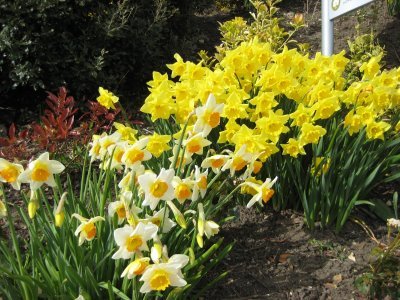
When the calendar turns the page to April, I always get a pang of nostalgia and immediately think of this poem and of England. There is truly no finer place in the world to be during the springtime. The photos above are a great example of what I mean.

Photos by permission of Maggie


Tuesday, February 21, 2012

The History of Shrove Tuesday and Pancakes


The History of Shrove Tuesday and Pancakes


In England, based on a traditional Christian holy day. Every year at 12:30 p.m. on Shrove Tuesday, Spitalfields Market in London, runs riot with teams of four people running relays with frying pans and pancakes.

The season immediately before Lent is called Shrovetide. It is a time for confessing sins (shriving) with fewer festivities than the Continental Carnivals. Shrove Tuesday is celebrated as Pancake Day, but apart from the serving of pancakes and occasional pancake races and football matches little else of the Lent-related Shrovetide survived the English Reformation.

When I was a child growing up in England I remember that Shrove Tuesday was a fun day when we ate pancakes and the local schools would have pancake races in the athletic fields. I never connected it with a religious ceremony until I was an adult.

Actually, Shrove Tuesday is the day before Lent starts: the Tuesday before Ash Wednesday. It's a day of penitence, to cleanse the soul, and a day of celebration as the last chance to feast before Lent begins.

Shrove Tuesday is sometimes called Pancake Day after the fried batter recipe traditionally eaten on this day, but there's more to Shrove Tuesday than pancakes or taking part in a public pancake race. The pancakes themselves are part of an ancient custom with deeply religious roots.

Penitence:

Shrove Tuesday gets its name from the ritual of shriving that Christians used to undergo in the past. In shriving, a person confesses their sins and receives absolution for them.
When a person receives absolution for their sins, they are forgiven for them and released from the guilt and pain that they have caused them. This tradition is very old. Over 1000 years ago a monk wrote about it in the Anglo-Saxon Ecclesiastical Institutes.

Shrove Tuesday celebrations:

Shrove Tuesday is a day of celebration as well as penitence, because it's the last day before Lent a time of abstinence, of giving things up. So Shrove Tuesday is the last chance to indulge yourself, and to use up the foods that aren't allowed in Lent. Giving up foods: but not wasting them.

The need to eat up the fats gave rise to the French name Mardi Gras ('fat Tuesday'). Pancakes became associated with Shrove Tuesday as they were a dish that could use up all the eggs, fats and milk in the house with just the addition of flour.

The origin of pancake racing:

Pancake races are thought to have begun in 1445. History recalls that a woman had lost track of the time on Shrove Tuesday, and was busy cooking pancakes in her kitchen.
Suddenly she heard the church bell ringing to call the faithful to church for confession. The woman raced out of her house and ran all the way to church; still holding her frying pan and wearing her apron.

Going for gold in the pancake Olympics:

One of the most famous pancake races is held at Olney in Buckinghamshire over a 415 yard course. The rules are strict; contestants have to toss their pancake at both the start and the finish, as well as wearing an apron and a scarf. The race is followed by a church service.
Since 1950 Olney has competed with Liberal in Kansas, which holds an identical race, to see which town can produce the fastest competitor. (Pictured above)

Tradition:

According to Christian beliefs, Lent commemorates Jesus' 40 days in the wilderness, and observant Christians mark this period by fasting. So Shrove Tuesday was cleverly invented to use up the ingredients that were given up for Lent - milk, butter and, particularly, eggs - which may not be eaten again until Easter.

Customs and celebrations:

In other parts of the world, Shrove Tuesday is marked by quite different celebrations. In New Orleans, and other parts of the United States, for example, it's celebrated with the Mardi Gras, and in Rio de Janeiro with the equally raucous carnival.

So, if you are attending local Mardi Gras celebrations have fun tonight!


Saturday, January 21, 2012

British Humour


*Some 'Quips' from British Newspapers *

Commenting on a complaint from a Mr. Arthur Purdey about a large gas bill, a spokesman for North West Gas said, 'We agree it was rather high for the time of year. It's possible Mr. Purdey has been charged for the gas used up during the explosion that destroyed his house.'
(The Daily Telegraph)

Police are being handicapped in a search for a stolen van, because they cannot issue a description. It's a Special Branch vehicle and they don't want the public to know what it looks like.
(The Guardian)

At the height of the gale, the harbour master radioed a coast guard and asked him to estimate the wind speed. He replied he was sorry, but he didn't have a gauge. However, if it was any help, the wind had just blown his Land Rover off the cliff.
( Aberdeen Evening Express)

* Heard On The London Underground Tube *

A list of actual announcements that London Tube train drivers have made to their passengers...

1) 'Ladies and Gentlemen, I do apologize for the delay to your service. I know you're all dying to get home, unless, of course, you happen to be married to my ex-wife, in which case you'll want to cross over to the Westbound and go in the opposite direction.'

2) 'Your delay this evening is caused by the line controller suffering from E & B syndrome: not knowing his elbow from his backside. I'll let you know any further information as soon as I'm given any.'

3) 'Do you want the good news first or the bad news? The good news is that last Friday was my birthday and I hit the town and had a great time. The bad news is that there is a points failure somewhere between Stratford and East Ham, which means we probably won't reach our destination.'

4) 'Ladies and gentlemen, we apologize for the delay, but there is a security alert at Victoria station and we are therefore stuck here for the foreseeable future, so let's take our minds off it and pass some time together. All together now.... 'Ten green bottles, hanging on a wall.....'.'

5) 'We are now travelling through Baker Street ... As you can see, Baker Street is closed. It would have been nice if they had actually told me, so I could tell you earlier, but no, they don't think about things like that'.

6) 'Beggars are operating on this train. Please do NOT encourage these professional beggars. If you have any spare change, please give it to a registered charity. Failing that, give it to me.'

7) During an extremely hot rush hour on the Central Line, the driver announced: 'Step right this way for the sauna, ladies and gentleman... unfortunately, towels are not provided.'

8) 'Let the passengers off the train FIRST!' (Pause ) 'Oh go on then, stuff yourselves in like sardines, see if I care - I'm going home....'

9) 'Please allow the doors to close. Try not to confuse this with 'Please hold the doors open.' The two are distinct and separate instructions.'

10) 'Please note that the beeping noise coming from the doors means that the doors are about to close. It does not mean throw yourself or your bags into the doors.'

11) 'We can't move off because some idiot has their hand stuck in the door.'

12) 'To the gentleman wearing the long grey coat trying to get on the second carriage -- what part of 'stand clear of the doors' don't you understand?'

13) 'Please move all baggage away from the doors.' (Pause..) 'Please move ALL belongings away from the doors.' (Pause...) 'This is a personal message to the man in the brown suit wearing glasses at the rear of the train: Put the pie down, and move your bloody golf clubs away from the door before I come down there and move them for you'

14) 'May I remind all passengers that there is strictly no smoking allowed on any part of the Underground. However, if you are smoking a joint, it's only fair that you pass it round the rest of the carriage.'


In Britain if you travel by train, bus or taxi, you are very likely to hear British humor by the conductors or drivers. They are all comedians :-)


Monday, December 26, 2011

Today is Boxing Day, December 26th


Today is Boxing Day, a traditional English holiday which extends Christmas giving.

Despite its name, Boxing Day has nothing to do with pugilistic competition. Nor is it a day for people to return unwanted Christmas presents.

Boxing Day began in England during the Middle Ages, and the tradition continued through the Victorian era. Wealthy family households would celebrate Christmas on Christmas day but this meant that their servants had to continue with their normal work and so, in effect, missed out on the celebration. To compensate for this the wealthy families would set aside 26th December as the time for their servant's Christmas.

Work duties would be dropped to a minimum with family members assuming some of the responsibilities of the servants such as keeping the fireplace stocked with coal, greeting visitors themselves and supplying the servants with a good Christmas dinner. The term "Boxing day" refers to the gift that the family gave to each servant - wrapped in box.

In the past people like the postman (mailman), refuse collector and milkman would call at the houses they serviced for a Christmas 'Box' but nowadays they are given a 'tip' when the homeowner sees them.

Even though many no longer remember the traditional reason for Boxing Day it is celebrated in Great Britain, Canada, Australia, and New Zealand.

My childhood memories of Boxing Day are that we spent the day together as a family, we relaxed, enjoyed our presents and ate leftovers from the Christmas dinner. Also our dad did not have to go to work on that day.

Boxing Day is just one of the British bank holidays recognized since 1871 that are observed by banks, government offices, and the post office.


Friday, November 11, 2011

Remembrance Day - Veterans Day 11/11 at 11a.m.

The eleventh month, the eleventh day and the eleventh hour –
is the time that many countries take a moment of
silence to remember the veterans of wars.


Remembrance Day – also known as Poppy Day, Armistice Day (the event it commemorates) or Veterans Day – is a day to commemorate the sacrifices of members of the armed forces and of civilians in times of war, specifically since the First World War.

It is observed on 11 November to recall the end of World War I on that date in 1918. (Major hostilities of World War I were formally ended at the 11th hour of the 11th day of the 11th month of 1918 with the German signing of the Armistice.) King George V specifically dedicated the day on 7 November 1919, to the observance of members of the armed forces who were killed during war.

In the United States it is called Veterans Day, Canada and Australia observe "Remembrance Day" on November 11, and Great Britain observes "Remembrance Day" on the Sunday nearest to November 11th.


In Great Britain, the day is commemorated by church services and parades of ex-service members in Whitehall, a wide ceremonial avenue leading from London's Parliament Square to Trafalgar Square.

Wreaths of poppies are left at the Cenotaph, a war memorial in Whitehall, which was built after the First World War. At the Cenotaph and elsewhere in the country, a two-minute silence is observed at 11 a.m., to honor those who lost their lives in wars.

The practice of wearing of poppies takes its origin from the poem In Flanders Fields, written in 1915 by Dr. John McCrae. Poppies grow best in freshly turned earth, and the battlefields of the First World War were covered with red poppies and they became a reminder of the many people who had died during that war.

*****

IN FLANDERS FIELDS by Dr. John McCrae

In Flanders fields the poppies blow

Between the crosses, row on row,

That mark our place; and in the sky

The larks, still bravely singing, fly

Scarce heard amid the guns below.

We are the Dead. Short days ago

We lived, felt dawn, saw sunset glow,

Loved and were loved, and now we lie,

In Flanders fields.

Take up our quarrel with the foe:

To you from failing hands we throw

The torch; be yours to hold it high.

If ye break faith with us who die

We shall not sleep, though poppies grow

In Flanders fields.


Remembering all persons who have served in the military around the world
and continued prayers for peace on earth.


peacesojourner

Saturday, November 5, 2011

Guy Fawkes is still remembered after 406 years


Today is the 5th of November. This date is set aside in Great Britain as Guy Fawkes Night - also known as Bonfire Night – which celebrates the foiling of an attempt to blow up the Houses of Parliament in London on November 5, 1605. This incident is still remembered 406 years after the event.

The attack was planned by a group of Catholic conspirators, which included Guy Fawkes. The explosives would have been set off when King James I of England (King James VI of Scotland) and many parliamentary members were in the building.

The conspiracy is also known as "The Gunpowder Plot”. The object of which was to blow up the English Parliament that was scheduled to open on November 5th of 1605. They hoped that such a disaster would initiate a great uprising of English Catholics, who were distressed by the increased severity of penal laws against the practice of their religion. Guy Fawkes (considered the ringleader) and his co-conspirators were arrested, tortured and executed for their part in the plot.

Today, one of the ceremonies, which accompany the opening of a new session of Parliament, is a traditional search of the basement performed by the Yeoman of the Guard.


So who was Guy Fawkes? He was born on April 13, 1570 in Stonegate, Yorkshire. He was originally raised as a Protestant but attended a Catholic school.

At 23, he enlisted in the Spanish Army under the Archduke Albert of Austria and was known to have held a post of command when the Spanish took Calais in 1596 under the orders of King Philip II. Described at this time as a man of great piety, of exemplary temperance, a faithful friend, and remarkable for his punctual attendance upon religious observance."

Guy Fawkes was a Catholic who wanted to restore Catholicism as the Church of England. In order to do this, he had to find a way to dethrone the Protestant king, thus the conspiracy to blow up the Houses of Parliament because on that night the king and most of the aristocracy (Protestant and Catholic) would be inside.

The conspirators were found guilty and on Friday, January 31, 1606, Guy Fawkes, Thomas Wintour, Ambrose Rookwod and Robert Keyes were taken to the Old Palace Yard at Westminster and hung, drawn and quartered "in the very place which they had planned to demolish in order to send the message of their wickedness."


*****

When we were children it was always a time of great excitement. Children would find donated men’s clothing and fill them full of fallen leaves and an effigy was made of Guy Fawkes. Held together with a belt at the waist, he was placed in a wooden wheelbarrow and wheeled around in the community. The tradition was to call out “penny for the guy”. This custom started originally to collect money for fireworks.

For several years we had a bonfire in our garden. We did not have fireworks but we always had ‘sparklers’ which we were allowed to hold in our hands. For us it was truly a magical experience.

Our mum would place potatoes wrapped in foil (jacket potatoes) in the fire to cook but they took such a long time we usually lost interest in those.


Traditionally there is a ceremonial effigy burning of Guy Fawkes, with fireworks glowing in the sky overhead. Nowadays I believe that it has become more of a community event in some towns and cities, where the municipality organizes a bonfire and hold a professional firework display in a park.
What is interesting to me, as I researched this topic for accuracy, I cannot remember ever hearing that the plot was the work of Catholics. So I am assuming that in more recent times that piece of history has been forgiven and we just use the tradition as a day to have fun.

I also checked with my family in England today to make sure that this is still happening as I have been away for a while. My sister just now emailed a reply “yes, bonfires and fireworks are going on as I type - Pebbles (her dog) is not happy!”

*****

The children sing traditional Rhymes:

Remember, remember the fifth of November

Gunpowder, treason and plot.

I see no reason, why gunpowder treason

Should ever be forgot.

*****

Guy, guy, guy

Poke him in the eye,

Put him on the bonfire,

And there let him die.

*****

Remember, remember the fifth of November

It's Gunpowder Plot, we never forgot

Put your hand in your pocket and pull out your purse

A ha'penny or a penny will do you no harm

If you don't have a penny a ha'penny will do.

If you don't have a ha'penny, then God bless you.


"A Penny For the Guy"

I have to say that writing this article has brought back some fond memories of childhood. I hope that present day children in Britain are also having fun today. :-)


Saturday, May 7, 2011

Today is National Train Day - 2011


The Southwest line travels from Waterloo, London to Bournemouth, England


A typical freight train in the United States

Today is National Train Day - 2011

Those who know me well know that I love to travel by train whenever I can. I sometimes think that I was born in the wrong century because I still have the nostalgia of train travel which developed when I was a child, and to be honest I have never felt the desire to rush from place to place :-)

Just this Tuesday I took a one day return ride on the the train from Buffalo, NY to Albany NY - a six hour journey each way - I was so happy to view the countryside just as the leaves are just appearing on the trees and the flowers are blooming. It is a wonderful route that travels through many towns and an excellent way to view the many bridges, and scenery that New York offers.

A young passenger in front of me was talking on his cell phone and I heard him say that he had never been on a train before and he was really enjoying it. He told his friend that it is just like being on an airplane except that the windows are much bigger and there is more opportunity to walk around. I thought that was an insightful observation.

As I was reading the complimentary magazine provided by Amtrak, I noticed the articles advertising information about the upcoming National Train Day and that it is on May 7, 2011 – today.

What Is National Train Day? It is a day for train lovers to celebrate the existence of trains. There are official Train Clubs; I have a friend who travels all over the world just to experience riding a certain train in a certain country. No, I do not sit at the train stations and record which trains I have viewed or travelled on in a Train Spotters Journal but I do think that I could get drawn into that hobby if someone invited me to do so.

Here is a condensed history of trains in the United States written by Amtrak. On May 10, 1869, in Promontory Summit, Utah, the "golden spike" was driven into the final tie that joined 1,776 miles of the Central Pacific and Union Pacific railways, ceremonially creating the nation’s first transcontinental railroad. And America was transformed.

Suddenly, the country was united in a way it never had been, and train travel sparked imaginations in small towns and big cities, among folk who desired adventure and businessmen who saw fortunes to be made. The sound of a train whistle was the soundtrack of happy reunions and tearful farewells. It heralded the arrival of mail, supplies and change.

The train became more than the go-to mode of transport for people and goods. It was a proud achievement of engineering vision, technical ingenuity and sweat. It was a cultural force that sparked the creative imaginations of storytellers in songs, movies and novels. Railways provided jobs for thousands of Americans. The train station became a focal point of every community, from New York City’s Pennsylvania Station to the tiny stations that dotted rural America.

Now, 140 years after the “golden spike” connected east and west, there’s never been a better time to take the train. Huge crowds and the frustrations that go with them burden our highways and airports. And at a time when we all share the same pressing concerns about environment and energy conservation, trains are a more energy-efficient mode of travel than either autos or airplanes. Riding the rails is not only a great way to reduce your carbon footprint, but also a great way to meet interesting people and see breathtaking scenery.

That’s why, in commemoration of the anniversary of the day the "golden spike" was driven, they celebrated the first-ever National Train Day on May 10, 2008. Thousands enjoyed live entertainment, train displays, raffles, prizes and surprises for big and small across the nation.
This year the events will be even better. Today there will be a coast-to-coast celebration of the way trains connect people and places, with major events in Washington, DC, Philadelphia, Chicago, and Los Angeles, while other events will occur in smaller markets nationwide. Join us and discover the Rail Way during any of the National Train Day festivities that are sure to be a treat for all ages.

To find out what activities may be happening to celebrate National Train Day in your area go to: http://www.nationaltrainday.com/2011/events

As I write this I realize that I could spend hours on this subject, especially about the immigrants who came to the United States (some voluntary and some enslaved) who laid those original tracks so that people could travel this vast country. I will save that story for another day.

I am off to my local train station to join in the fun – why not join me?

peacesojurner


Wednesday, April 20, 2011

A Preview of the Royal Wedding


Got to love the British sense of humour -
this gave me the best laugh I've had in a long time. (Amazing look-alikes also)


www.youtube.com
Watch the wedding entrance dance to top all wedding entrance dances. T-Mobile's Royal Wedding Dance celebrates the marriage of William and Kate with the help of a host of royal look alikes and music from East 17! T-Mobile wishes William and Kate a long and happy marriage. Join our Facebook group htt

Click on the blue writing - it is a little hard to see it

Wednesday, April 13, 2011

Can We Talk? - re: Texting & Abbreviations - part II


Some time ago I wrote a message about modern technology and texting abbreviations. The message was directed at people like myself- the fuddy-duddies of modern technology. Those of you who are experts at texting will probably find this old news and boring :-) but I am guessing that I am going to introduce you to some new texting abbreviations.

The following abbreviations were composed by senior citizens and sent to me by a friend recently. So this message is for my more mature readers and the younger readers may just learn something new.

ATD - At The Doctors ...

BFF - Best Friend Fell ...

BTW - Bring the Wheelchair ...

BYOT - Bring Your Own Teeth ...

FWIW - Forgot Where I Was ...

GGPBL - Gotta Go Pacemaker Battery Low ...

IMHO - Is My Hearing-Aid On ...

LMDO - Laughing My Dentures Out ...

OMMR - On My Massage Recliner ...

OMSG - Oh My! Sorry, Gas ...

ROFLACGU - Rolling On Floor Laughing And Can't Get Up

*****

HAND . . . Have a nice day

If you can relate to what I have written let me hear from you - I am gradually learning this method of communication :-)

So TTFN - that means 'TaTa for now' (goodbye) in England

peacesojourner

:-) :-) :-)